If a similar institute were founded for Inuktitut, it could help to preserve the existence of Inuktitut language, and in doing so, it would protect ancient Inuktitut culture.
Looking further into the background of Inuktitut, I found that it is spoken by about 65,000 people in Siberia, Greenland, Alaska, and Canada--especially in the Nunavut territory, which is 85% Inuit. Early Northern Canadian settlers recognized the importance of Inuktitut to such a degree that they translated the bible into Inuktitut, recorded the Inuktitut grammar, and created an "Eskimo-English" dictionary. To show how developed the language is, I've included a diagram of the Inuktitut syllabary below:
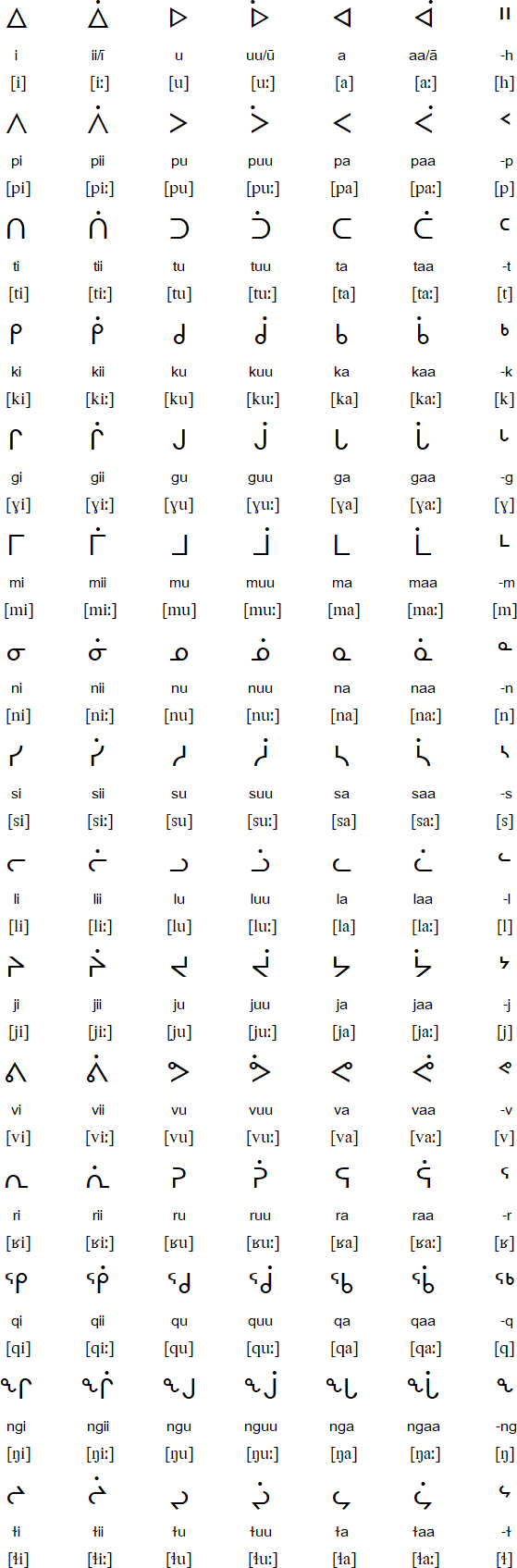
(http://www.omniglot.com/writing/inuktitut.htm)
However, Inuktitut will need far more than its own syllabary if its going to survive. It will need to come up with new words to adapt to the rapidly changing world. To come up with new words and to standardize spelling across regions would be one of the main purposes of the Inuktitut institute if it were founded. It would unite people so that they could preserve their language and culture as they progress together into the modern world.
I think that the preservation and updating of their languages is one of the most important steps native peoples can take if they are to preserve their cultures while thriving in the modern world.

1 comment:
You make a very interesting, somewhat counterintuitive point regarding language preservation: sometimes a language has to adapt and change in order to survive at all. Can you think of how this idea plays out even for modern English?
Post a Comment